
VSRR8-Bypass Soft Starter
VSRR8-Bypass Soft Starter
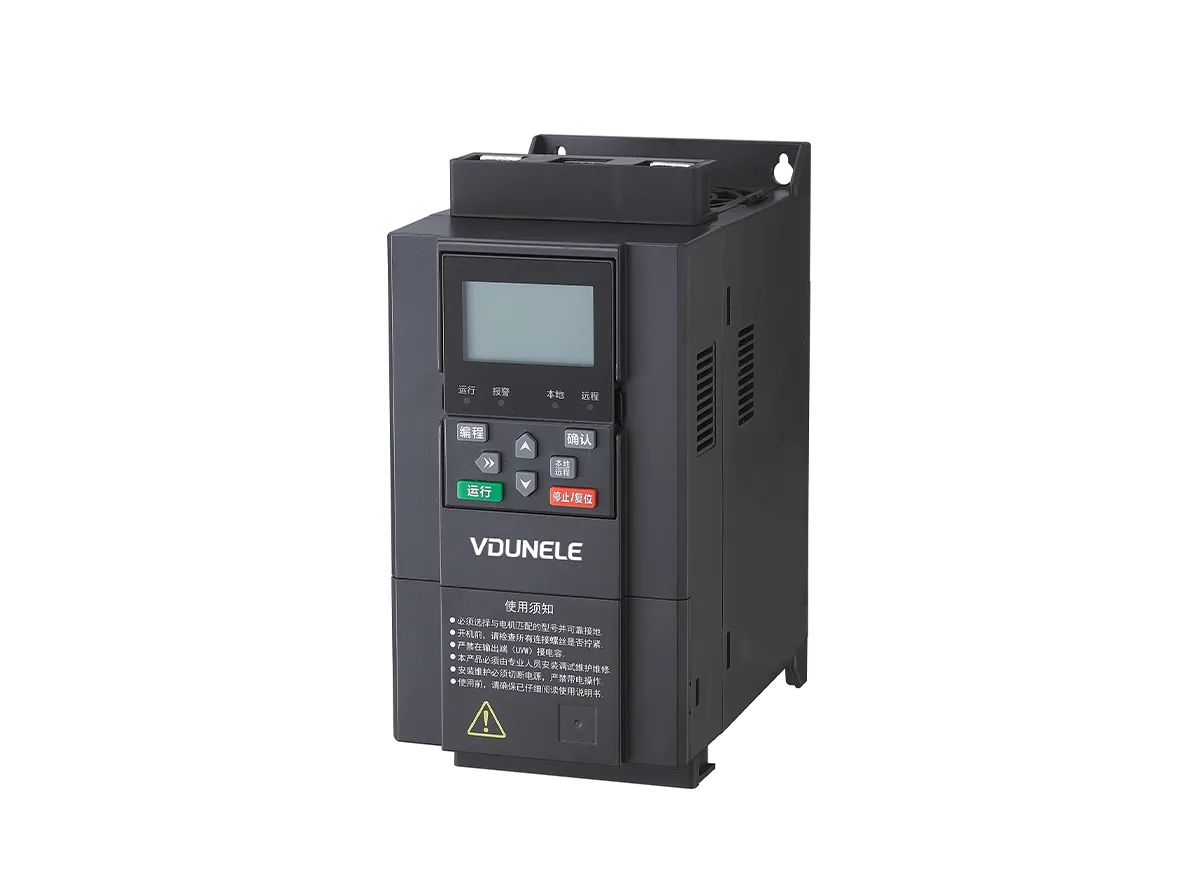
Engineered for high-reliability, easy maintenance, and medium-to-high power motor applications. Featuring a separated design with a main control unit and an external bypass contactor, it combines the smooth, intelligent control of soft starting with the efficient and reliable operation of contactors. It is the ideal starting solution for critical industrial equipment.
1. Unique Construction, Professional-Grade High Reliability
Separated Main Control & Bypass Design:
Isolated Failure Risk: The soft starter core (thyristor modules and control unit) is physically separated from the external bypass contactor. After start completion, the motor current is carried by the independent bypass contactor, completely eliminating the thermal losses and potential failure points associated with continuous thyristor operation. This dramatically enhances overall system reliability.
Superior Heat Dissipation: The separated structure provides ample space for heat dissipation from the thyristor modules and control unit, effectively lowering operating temperatures of core components and extending service life. This is particularly advantageous for continuous operation or installations with limited ventilation.
Built for Heavy-Duty & Frequent Cycling:
The dedicated bypass contactor is designed for continuous current carrying, featuring high contact capacity and strong impact resistance. Once the motor reaches full voltage, the contactor handles the main circuit current, ensuring stable performance without the additional heat and energy consumption caused by thyristor voltage drop.
This design is especially suitable for applications requiring frequent start/stop cycles per hour or extremely long periods of bypassed operation.
2. Unparalleled Ease of Installation & Maintenance
Flexible Cabinet Layout:
The main soft starter module is compact and can be easily installed in standard control cabinets. The independent bypass contactor can be optimally positioned based on available cabinet space and cable routing, offering far greater installation flexibility than integrated units. This is particularly beneficial for retrofit projects and custom cabinet designs.
Simple Maintenance, Low Cost of Ownership:
Modular Maintenance: If either the soft starter controller or the bypass contactor requires service, they can be inspected or replaced independently without affecting the other. This significantly reduces troubleshooting and repair downtime.
Universal Contactor Spares: The external bypass contactor is a standard industrial component, widely available through multiple channels. Spare parts are low-cost and easy to replace, eliminating the need for customers to stock expensive, dedicated integrated units as backups.
3. Powerful Core Control Performance
Full-Featured Soft Start Control:
Equipped with the same advanced control functions as integrated units: Voltage Ramp Start, Current Limit Start, Torque Control (optional), Pump Start/Stop (to eliminate water hammer), and Soft Stop, delivering optimal acceleration and deceleration profiles.
Incorporates comprehensive electronic protection: Phase Loss, Overcurrent, Overload, Stall, Phase Imbalance, Motor Overheat, etc., safeguarding motor and system integrity.
Advanced Communication & Integration Capability:
Standard RS485 communication interface supports protocols like Modbus-RTU for seamless integration into PLC and DCS systems. Enables remote start/stop, status monitoring, parameter adjustment, and fault alarms, meeting the demands of smart factory management.
4. Clear Value Proposition & Application Scenarios
Customer Value:
Higher Reliability: Separated design results in lower failure rates, ensuring continuous production.
Lower Maintenance Costs: Easy to service with universal, low-cost spare parts, offering a superior total cost of ownership over its lifecycle.
Greater Flexibility: Adaptable installation fits various electrical cabinet layouts and project requirements.
Typical Applications:
Medium & High Power Motors (typically above 90kW): Leverages its stability advantage for handling high currents in bypass mode.
Critical Production Equipment: Such as crushers, large pumps, compressors, and fans in mining, water treatment, and HVAC, where unscheduled downtime is unacceptable.
Retrofit Projects & Space-Constrained Installations: Allows for flexible, distributed installation within existing cabinets or limited spaces.
Equipment with high cycle rates or requiring extended bypass operation.
Conclusion:
Our Bypass Soft Starter with External Contactor achieves the perfect balance of reliability, maintainability, and flexibility through its innovative "separated main control and bypass" design. It delivers not only smooth motor control and comprehensive protection but also industrial-grade durability and ease of maintenance, making it a trusted core component for medium-to-large industrial equipment and critical processes.
Choosing the External Bypass design means choosing professional-grade reliability and long-term peace of mind.
Inline Soft Starter Wiring Reference Diagram

| Selectable Soft Start Curves | Customizable Protection Functions |
| Voltage Ramp Start | Input Phase Loss |
| Voltage Ramp + Kick Start | Output Phase Loss |
| Current Limit Start | Soft Starter Overtemperature |
| Phase Sequence Reversal | |
| Selectable Soft Stop Curves | Running Overload |
| Free Stop | Start-Up Overcurrent |
| Soft Stop | Running Overcurrent |
| Overvoltage | |
| Expanded Input and Output Options | Undervoltage |
| Remote Control Input | Underload |
| Relay Output | |
| Analog Output | Models to Meet All Connection Needs |
| Digital Input/Output | 13A - 2390A (Rated Current) |
| RS485 Communication | 220VAC - 380VAC |
| Motor Temperature Detection | Star Connection |
| Easy-to-Read Display with Comprehensive Feedback | |
| Detachable Control Panel | |
| Built-in Chinese + English Display | |
Soft Starter Terminal Wiring Diagram

Soft Starter Secondary Terminal Arrangement Diagram

| Terminal Type | Terminal No. | Terminal Name | Description | |
| Main Circuit | R, S, T | Power Input | Connect to three-phase AC power supply | |
| U, V, W | Motor Output | Connect to three-phase induction motor | ||
| Control Circuit | Communication | 485+ | RS485 Communication Positive | For RS485 communication (RTU mode) |
| 485- | RS485 Communication Negative | |||
| Programmable Digital Input | +24V | 24V Auxiliary Power | Maximum 100mA output current | |
| X1 | Start | Short with COM to start the soft starter | ||
| X2 | Stop | Short with COM to stop the soft starter | ||
| X3 | Reset | Short with COM to reset the soft starter | ||
| X4 | External Fault | Short with COM to trip the soft starter on fault | ||
| COM | Common | Used with +24V | ||
| Analog Output | AO | 4-20mA Output Positive | 4-20mA output | |
| GND | 4-20mA Output Ground | |||
| Programmable Relay | TA1 | Programmable Relay 1 | Programmable relay output, selectable from: 0: Idle 1: Soft starter ready 2: Soft starter running 3: Soft starter jogging 4: External fault trip 5: Soft starter fault 6: Start complete 7: Soft stop in progress 8: Bypass active |
|
| TC1 | ||||
| TA2 | Programmable Relay 2 | |||
| TC2 | ||||
| TA3 | Programmable Relay 3 | |||
| TC3 | ||||
| Programmable Digital Output | Y1 | Digital Output | ||
| Temperature Detection | PTC1 | Temperature Detection | Connect to thermistor for motor temperature monitoring |
|
| PTC2 | ||||


| Model / Power Rating | Overall Dimensions (mm) | Mounting Dimensions (mm) | Mounting Hole (mm) |
||||
| W | H | H2 | D | W1 | H1 | ||
| 5.5KW-55KW | 125 | 252 | 206 | 197.5 | 102 | 228 | 4 |
| 75KW-110KW | 190 | 364 | 330 | 234.5 | 140 | 316 | 6 |
| 132KW-200KW | 225 | 370 | 340 | 226 | 160 | 326 | 6 |
Related Products

CONTACT US
Contact US
Product Information
Quantity
Unit
Piece
Support order samples, customization, wholesale direct, and complete payment. If the product you look for does not have corresponding customized content, pls fill out the form below to contact us, and we will reply ASAP.