
VSRR6-Online Soft Starter
VSRR6-Online Soft Starter
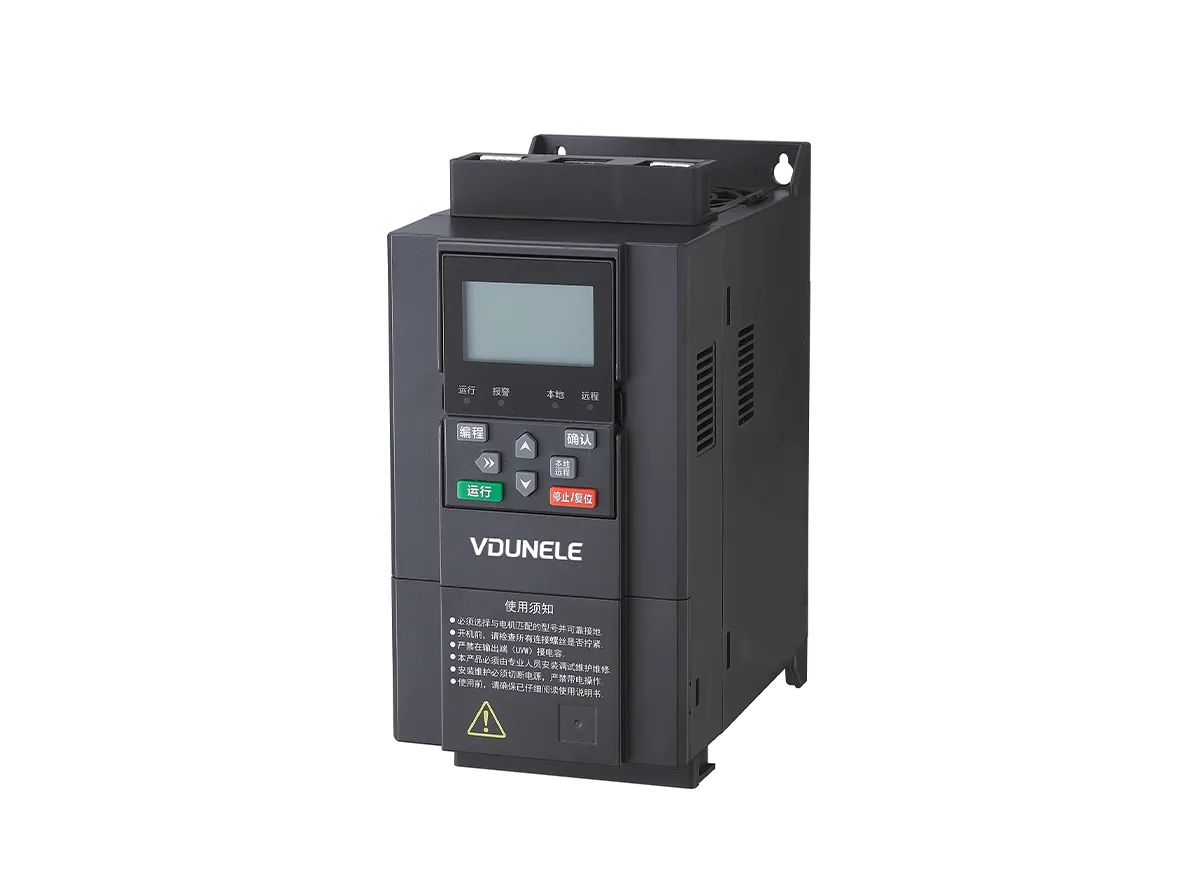
Provides smooth, intelligent, and reliable motor start and stop control. It is a modern solution replacing traditional star-delta starters and auto-transformer starters, effectively protecting motors and drive systems, saving energy, reducing consumption, and enhancing overall system performance.
1. Core Technical Advantages: Superior Motor Protection
Smooth Soft Start & Stop:
No-Inrush Starting: Utilizes advanced voltage ramp or current limit control technology to gradually increase motor voltage from an initial value to full voltage. This completely eliminates the high current impact (typically 5-8 times FLC) of direct-on-line starting, limiting starting current to an adjustable range of 1.5 to 4.5 times the motor's rated current.
No-Shock Soft Stop: Provides an adjustable deceleration stop (soft stop) function, preventing mechanical damage and process issues caused by sudden stops, such as water hammer in pumps or material spillage on conveyors.
Comprehensive Protection Functions:
Built-In Multiple Protections: Integrates comprehensive electronic protection against phase loss, overload, overcurrent, underload, stall/jam, phase imbalance, and overheating. Offers significantly faster response times than traditional thermal relays, providing reliable protection for both the motor and the starter itself.
Intelligent Fault Diagnostics & Memory: An LCD/LED display provides real-time operational status, current, voltage, and fault information. It also logs historical fault data, facilitating quick troubleshooting and minimizing downtime.
2. Intelligent Control & Outstanding Performance
Intelligent Adaptive Control:
Select high-end models feature adaptive energy-saving or torque control functions. After start-up, they automatically adjust output voltage based on actual load conditions, reducing energy consumption and temperature rise during light-load operation, thereby improving efficiency.
The optimal start-up curve can be selected based on load characteristics (e.g., square torque for fans/pumps, constant torque for conveyors) to achieve the best starting performance.
Powerful Compatibility & Communication Capabilities:
Multiple Control Modes: Supports various modes including voltage ramp, current limit, kick-start (jog), and pump control (specifically "pump stop" to eliminate water hammer).
Integrated Industrial Communication: Comes standard with or offers optional RS485 communication interface, supporting mainstream industrial protocols like Modbus-RTU and Profibus-DP. Enables seamless integration with PLCs, DCS, or SCADA systems for remote monitoring, parameter setting, and centralized management, making it an ideal choice for smart manufacturing and IoT applications.
3. High-Reliability Design
Robust Hardware Quality:
High-Performance Thyristor Modules: Employs imported or high-quality thyristor modules with high current-carrying capacity and excellent thermal design for long-term stable operation.
Enhanced Cooling System: Features large-area aluminum heat sinks combined with efficient forced-air or natural convection cooling designs, suitable for harsh industrial environments with high temperatures and dust.
Anti-Interference Design: PCBs are coated with conformal coating (anti-fungal, anti-moisture, anti-salt spray). Both hardware and software pass EMC tests, ensuring strong electromagnetic interference resistance and stable operation.
Easy Installation & Maintenance:
Integrated Compact Design: Incorporates a built-in bypass contactor (a key feature of on-line starters). After start-up completion, the internal contactor bypasses the thyristors, reducing power consumption and heat generation, thereby extending product life.
User-Friendly Interface: Features a keypad/potentiometer combined with a digital display for intuitive and simple parameter setting without requiring specialized tools.
Modular Design: Key functional modules are replaceable independently, simplifying maintenance and reducing long-term operational costs.
4. Delivering Core Value to Customers
For Equipment: Extends the lifespan of motors, couplings, belts, gearboxes, and other mechanical components, reducing maintenance costs.
For Power Grid: Reduces start-up impact on the electrical grid, prevents voltage dips, and ensures stable operation of other equipment on the same network. Particularly suitable for sites with limited transformer capacity.
For Processes: Enables smooth, controlled acceleration and deceleration, improving process quality and protecting products and workflows.
For Operations: Minimizes failure-related downtime, reduces maintenance intensity, and enables intelligent management through communication capabilities, laying the foundation for progress toward Industry 4.0.
Conclusion:
Our On-Line Soft Starter is not merely a motor "start switch" but an intelligent protection expert and energy-saving manager for motor systems. Through its four core features—Smooth Start, Comprehensive Protection, Intelligent Control, and Robust Reliability—it provides customers with an efficient, stable, and economical motor drive solution. It is the preferred choice for upgrading traditional starting equipment and building modern industrial drive systems.
Inline Soft Starter Wiring Reference Diagram

| Selectable Soft Start Curves | Customizable Protection Functions |
| Voltage Ramp Start | Input Phase Loss |
| Voltage Ramp + Kick Start | Output Phase Loss |
| Current Limit Start | Soft Starter Overtemperature |
| Phase Sequence Reversal | |
| Selectable Soft Stop Curves | Running Overload |
| Free Stop | Start-Up Overcurrent |
| Soft Stop | Running Overcurrent |
| Overvoltage | |
| Expanded Input and Output Options | Undervoltage |
| Remote Control Input | Underload |
| Relay Output | |
| Analog Output | Models to Meet All Connection Needs |
| Digital Input/Output | 13A - 2390A (Rated Current) |
| RS485 Communication | 220VAC - 380VAC |
| Motor Temperature Detection | Star Connection |
| Easy-to-Read Display with Comprehensive Feedback | |
| Detachable Control Panel | |
| Built-in Chinese + English Display | |
Soft Starter Terminal Wiring Diagram

Soft Starter Secondary Terminal Arrangement Diagram

| Terminal Type | Terminal No. | Terminal Name | Description | |
| Main Circuit | R, S, T | Power Input | Connect to three-phase AC power supply | |
| U, V, W | Motor Output | Connect to three-phase induction motor | ||
| Control Circuit | Communication | 485+ | RS485 Communication Positive | For RS485 communication (RTU mode) |
| 485- | RS485 Communication Negative | |||
| Programmable Digital Input | +24V | 24V Auxiliary Power | Maximum 100mA output current | |
| X1 | Start | Short with COM to start the soft starter | ||
| X2 | Stop | Short with COM to stop the soft starter | ||
| X3 | Reset | Short with COM to reset the soft starter | ||
| X4 | External Fault | Short with COM to trip the soft starter on fault | ||
| COM | Common | Used with +24V | ||
| Analog Output | AO | 4-20mA Output Positive | 4-20mA output | |
| GND | 4-20mA Output Ground | |||
| Programmable Relay | TA1 | Programmable Relay 1 | Programmable relay output, selectable from: 0: Idle 1: Soft starter ready 2: Soft starter running 3: Soft starter jogging 4: External fault trip 5: Soft starter fault 6: Start complete 7: Soft stop in progress 8: Bypass active |
|
| TC1 | ||||
| TA2 | Programmable Relay 2 | |||
| TC2 | ||||
| TA3 | Programmable Relay 3 | |||
| TC3 | ||||
| Programmable Digital Output | Y1 | Digital Output | ||
| Temperature Detection | PTC1 | Temperature Detection | Connect to thermistor for motor temperature monitoring |
|
| PTC2 | ||||


| Model / Power Rating | Overall Dimensions (mm) | Mounting Dimensions (mm) | Mounting Hole (mm) |
||||
| W | H | H2 | D | W1 | H1 | ||
| 5.5KW-55KW | 125 | 252 | 206 | 197.5 | 102 | 228 | 4 |
| 75KW-110KW | 190 | 364 | 330 | 234.5 | 140 | 316 | 6 |
| 132KW-200KW | 225 | 370 | 340 | 226 | 160 | 326 | 6 |
Related Products

CONTACT US
Contact US
Product Information
Quantity
Unit
Piece
Support order samples, customization, wholesale direct, and complete payment. If the product you look for does not have corresponding customized content, pls fill out the form below to contact us, and we will reply ASAP.